

Thailand has been and continues to be one of the most successful countries in the region for attracting Foreign Direct Investment (FDI), due to its numerous advantages for foreign investors seeking to do business in Asia. It provides an attractive business climate which has consistently received decades of support for private investment from successive Thai governments, all of which have realized the important role of the private sector in creating and maintaining Thailand's economic growth and prosperity along with its technological development.
In particular, the Thai government's extremely positive stance toward foreign investors means that, unless the special incentives offered by the Board of Investment (BOI) are being applied for, no prior government approval is necessary for making investments in Thailand, and most sectors of the economy are open to foreign investors. Thailand continues to improve its attractiveness for FDI through many government initiatives which seek to make the country more accessible to those seeking to expand their presence in Asia while at the same time reducing the amount of “red tape” required for beginning or expanding such business activities. This has resulted in a steady improvement in the country's overall rankings as published by independent observers, some of which are highlighted here.
When asked to choose the Thailand's top 5 attractiveness indicators for the IMD's World Competitiveness Executive Opinion Survey, Thailand's business friendly environment consistently was given as the first and most important factor. The other factors listed as most favorable included a dynamic economy, open and positive attitudes, a reliable infrastructure, and competitive costs. For 2021, the capital city of Bangkok was rated as the number one destination for a “workation” in a global survey made by the German based vacation search engine company Holidu, where users voted for the location where they would most prefer to go to mix business with pleasure while working remotely from a holiday destination abroad. The Thai capital was ranked first thanks to its affordable cost of living, high degree of English language proficiency, range of attractions, wealth of world class facilities, and numerous multinational corporate offices. Two other Thai cities also made it into the global top ten, Chiang Mai in the north of Thailand, and Phuket in the south.
A few quick facts about Thailand:
Thailand covers an area of 513,000 square kilometers and has a population of 65.81 million. In 2025, the country recorded a GDP of US$577 billion, with GDP per capita reaching US$8,200 and real GDP growth of 2.4%. Consumer price inflation stood at -0.1%, while the unemployment rate remained low at 0.9%, supported by a labor force of 41.91 million (Q1 2026 data). Thailand’s current account balance amounted to 2.8% of GDP in 2025, while foreign direct investment inflows reached approximately US$10.58 billion in 2024, according to UNCTAD’s World Investment Report 2025.
Thailand continues to strengthen its position as a leading regional hub for investment, business, and global talent. In the 2026 U.S. News & World Report Best Countries rankings, Thailand was recognized for its strengths in tourism, digital connectivity, infrastructure, and economic development. Thailand also ranked 4th globally in CEOWORLD magazine’s 2025 World’s Best Countries for Business Expats and 10th in the World’s Best Countries for Retirement, reflecting its competitive business environment, strategic location in Southeast Asia, strong digital infrastructure, affordable cost of living, and high quality of life. Supported by a skilled workforce, an established manufacturing base, and a globally recognized hospitality sector, Thailand remains an attractive destination for international investors and long-term growth opportunities.
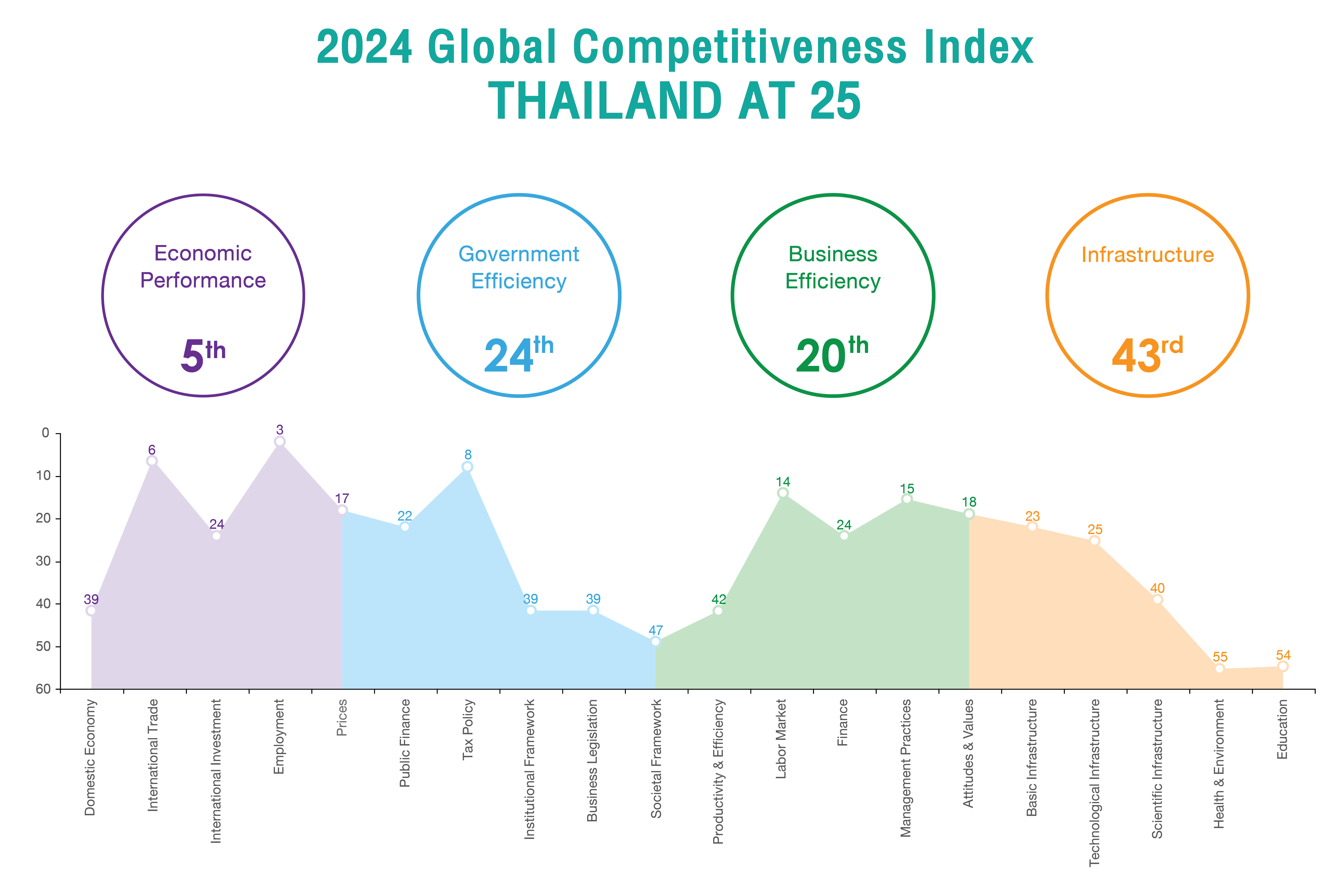
In the 2025 IMD World Competitiveness Ranking, Thailand slipped to 30th place among 69 economies, down five positions from its 25th‑place ranking in 2024. Its Economic Performance dropped from 5th to 8th, while Government Efficiency declined sharply from 24th to 32nd. Business Efficiency fell four places to 24th, and Infrastructure slipped from 43rd to 47th.
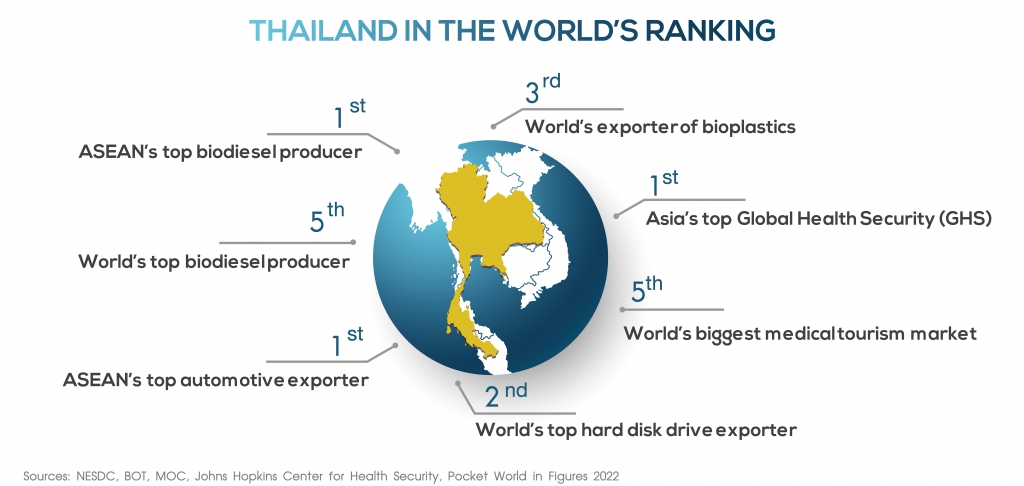
Thailand is the largest automotive exporter among Southeast Asian countries. It is also ranked the second largest Hard Disk Drive (HDD) producer in the world. For biodiesel production, Thailand ranks the 5th of the largest producer in the world and the 1st in ASEAN. Meanwhile, Johns Hopkins University has ranked Thailand as the country with the 5th best health security in the world and the 1st in Asia in the 2021 Global Health Security Index.
Digital Infrastructure Development
Thailand's government is committed to advancing digital infrastructure development as part of its Industry 4.0 economic model. This transformative approach aims to establish Thailand as a "Value-based Innovation Driven Economy" by embracing cutting-edge technologies and digital transformation. Recognizing the significance of Industry 4.0 in driving economic growth and competitiveness, the government is actively promoting initiatives to modernize industries and enhance productivity through automation, robotics, and data analytics.
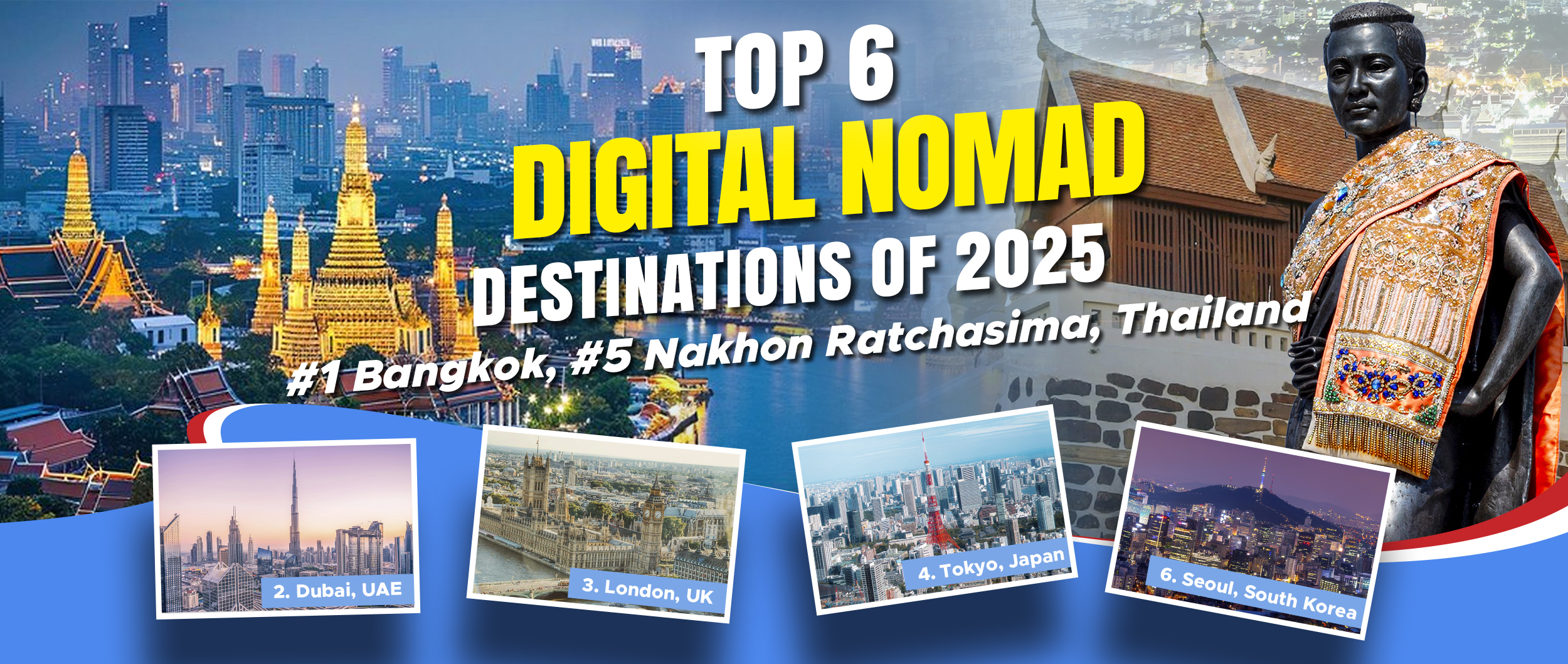
In 2025, Bangkok and Nakhon Ratchasima have been recognized as two of the world’s top destinations for digital nomads, according to Hotel With Tub’s ranking of the Top 100 Digital Nomad Destinations. Bangkok stands out for its excellent digital infrastructure, vibrant coworking scene, and dynamic urban lifestyle, offering remote workers a balance of productivity and rich cultural experiences. Meanwhile, Nakhon Ratchasima (Korat) is gaining popularity for its lower cost of living, growing remote work infrastructure, and more relaxed pace, making it an appealing alternative for those seeking comfort and connectivity outside major urban hubs. Together, these cities highlight Thailand’s growing appeal as a leading hub for global digital nomads. Read more: here.
Medicine and Healthcare
In the 2021 Global Health Security (GHS) Index, Thailand ranked 5th out of 195 countries, earning an overall score of 68.2 out of 100—an improvement from its 6th place position in 2019. The country received top-tier scores in Detection & Reporting (91.5, ranked 1st globally) and Rapid Response (67.3, ranked 2nd), surpassing many higher-income nations. Thailand also performed above the global average in key areas such as health system capacity, compliance with international norms, and risk environment, highlighting its robust preparedness across the pandemic response continuum.
Supporting the country’s strong health infrastructure are 23 accredited medical institutions nationwide. According to the World Health Organization, Thailand has an average of 29.3 health workers per 10,000 population. With ASEAN’s continued emphasis on enhancing regional labor mobility, Thailand’s medical workforce is expected to grow further as professionals—such as nurses, dentists, and physicians—move more freely within the ASEAN community. In addition to its quality medical education, Thailand also places strong emphasis on research, development, and innovation, supported by leading national institutions including BIOTEC, the National Innovation Agency, and Thailand Science Park.
Thailand – Kitchen of the World

In 2024, Thailand advanced to 15th place in the global rankings for agricultural exports, improving from 16th position the previous year. This upward movement underscores the country’s ongoing efforts to enhance the value and competitiveness of its agricultural sector in the international market.
Thailand continues to play a significant role in global agricultural production:
• Natural Rubber: Thailand remains the world’s largest producer, with an estimated output of 5.28 million metric tons.
• Sugar: The country ranks 4th globally in sugar production, contributing approximately 5% of total world output.
• Rice: Thailand is the 6th-largest rice producer, with production totaling around 30.2 million metric tons.
Thailand also maintains strong positions in agricultural exports across several key commodities:
• Canned Tuna: Ranked as the world’s leading exporter, with export values reaching $2.34 billion in 2024.
• Cassava Starch: Thailand holds the top position globally, with exports valued at $3.13 billion.
• Rice: The country ranks second in global rice exports, generating $6.43 billion in export revenue.
• Sugar: Thailand is the third-largest sugar exporter, with an export value of $2.41 billion.
These figures highlight Thailand’s strategic importance in the global agricultural supply chain and its continued commitment to export-led growth through innovation, diversification, and market expansion.
Source : Ministry of Commerce, Foreign Agricultural Service, Foreign Affairs Office, The Government Public Relations Department, Thailand.go.th, and Trade Policy and Strategy Office
Manufacturing and Economic Statistics
Year on year, Thailand has demonstrated resilience and improvement across several key economic indicators. In 2023, the country ranked approximately 27th globally by GDP size, with a nominal GDP of about $515 billion. Thailand continued to maintain a current account surplus, ranking around 27th worldwide, with a surplus of approximately $7.41 billion. As a major agricultural player, Thailand ranked 11th globally in agricultural output, with an estimated value of $43.3 billion in 2020. Its manufacturing sector remained strong, ranking 22nd globally with a value of approximately $128.3 billion in 2023. The country’s industrial output, including mining and utilities, ranked 21st globally, with a value-added output of around $166 billion in 2020. In the services sector, Thailand held steady, ranking 25th in terms of output, valued at $292.3 billion in 2020. Thailand’s export performance remained robust in 2024, positioning it among the top 26 exporters globally, with exports totaling $299.3 billion. Reflecting ongoing industrial growth, the country saw 2,598 new factory openings in 2023, generating over 106,000 new jobs, according to the Ministry of Industry.
Source: 2025 IMD World Competitiveness Ranking (WCR) The National Economic and Social Development Council, U.S. News & World Report, CEOWORLD Magazine, World Integrated Trade Solution, The National Food Institute, นโยบายการพัฒนาอุตสาหกรรมไทย 4.0 , Thailand 4.0, The best places to be a 'Digital Nomad' in 2023: Research 2021 GHS Index HOTELWITHTUB
As of May 5th, 2026